
Leading Cancer Institute
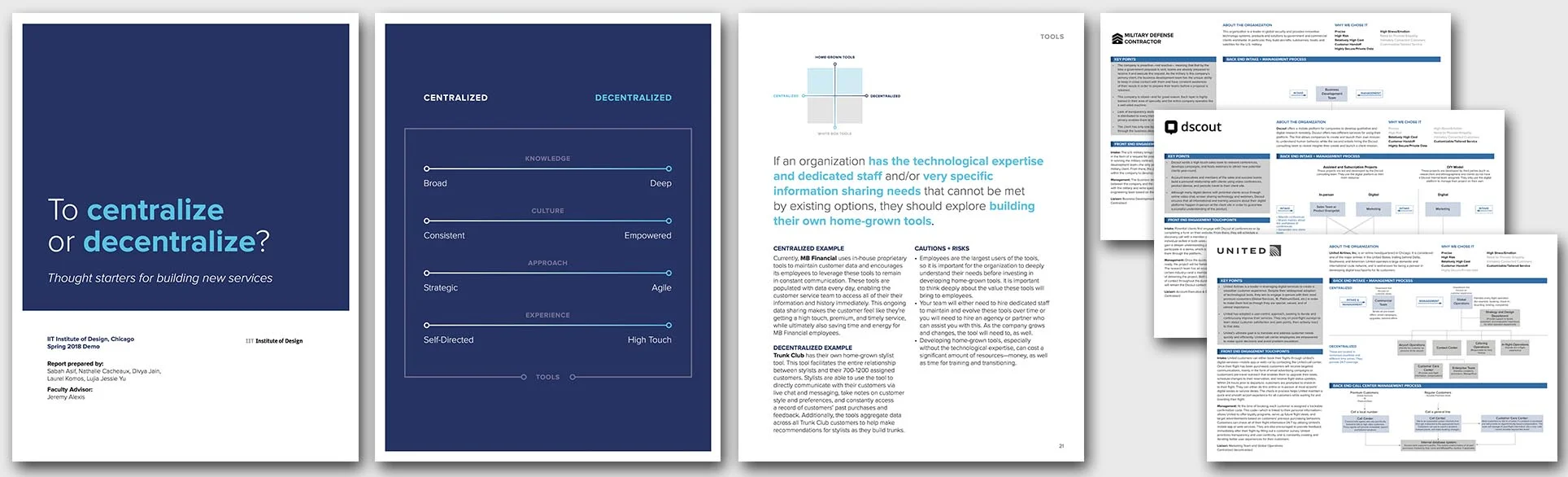
project
In Spring 2018, I was part of a select group of student consultants working on a collaborative project between a leading cancer institute in New York and the Institute of Design. The cancer institute has an administrative and support service where care advisors match new patients with an appropriate doctor, schedule their first appointments, and provide them with assistance throughout their journey. Care advisors are experts at customizing the cancer institute’s system to meet patients’ needs.
The cancer institute is currently developing another centralized service, in this case staffed with clinicians who are experts at managing the symptoms and side effects of chemotherapy. A major challenge for this new service was to make a centralized service feel like a part of de-centralized primary care teams. What can this new service learn from the existing support system? How do analogous industries handle client intake and management, and make it a pleasant experience? What part of the patient journey is best centralized, and what part is best decentralized?
my role
The following work was split evenly between the team of 5:
Conducting extensive secondary research on cancer care, treatment, and individualized patient journeys.
Writing separate interview protocols for companies in healthcare, consulting, finance, technology, education, retail and hospitality.
Interviewing client managers from companies which also operate in high precision, high risk, high cost, high emotion, and/or high privacy industries.
Analyzing and synthesizing data from interviews.
Creating and facilitating a workshop in New York for clinicians, physicians, care providers and other staff from the cancer institute.
Developing insights and best practices for smooth client intake and management.

Research was done on the client management techniques of analogous companies
Design Methods
Research to identify attributes and dimensions of the cancer institute’s patient experience.
Attributes: High precision, risk, cost, intimacy, privacy in service, emotion, and customization.
Dimensions: centralized vs. decentralized, high touch vs. low touch, live interaction vs. non-live interaction, analog vs. digital, uses a CRM tool vs. does not use a CRM tool.
Case studies of companies with analogous attributes and dimensions in hospitality, consulting, technology, retail, finance, education, and healthcare.
16 interviews with client managers to understand touch points as they are seamlessly managed and moved through complex organizations.
Workshop with our client to discuss our findings, and assess the ways in which they can be customized for a cancer patient’s journey.
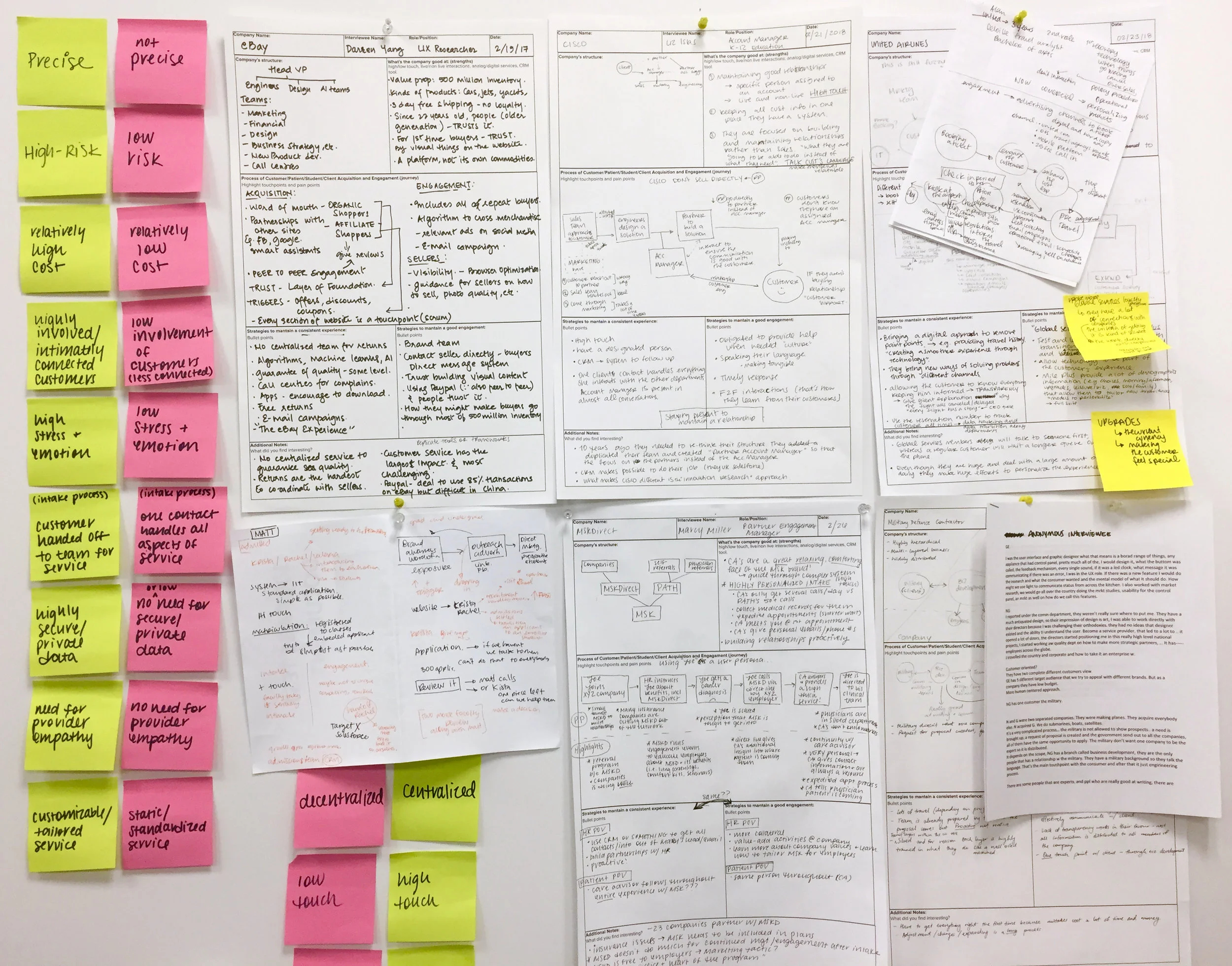
Keeping track of interview data
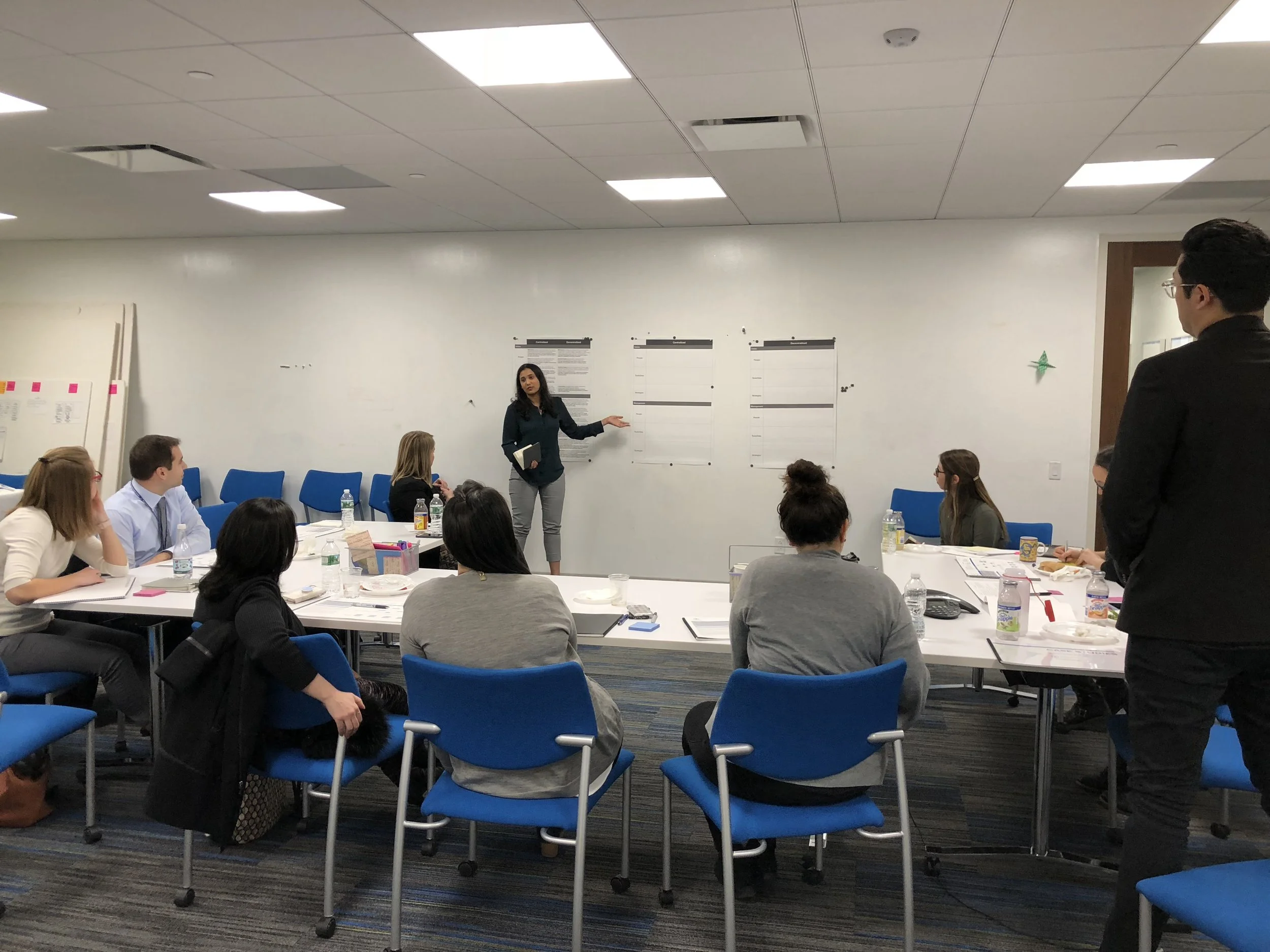
Facilitating workshop with client in New York
insights
Centralized organizations have a clear chain of command and responsibilities that travel through all or most of the levels within their hierarchy.
Decentralized organizations have delegated responsibilities in decision-making or determining independent processes to individual departments, empowering them to take action and handle most aspects of their operations on their own.
Very rarely are organizations entirely centralized or decentralized, and often they fall somewhere on a spectrum.
There are some rare and highly successful organizations, that are outliers, which manage to offer a hybrid of centralized and decentralized services without impacting knowledge, culture, approach or experience.
outcome
We developed a framework that our client could reference when developing a new centralized or decentralized service within the organization. The framework contained four categories within which an organization can choose to be either centralized or decentralized - knowledge, culture, approach, and experience - along with a corresponding spectrum for each. Tools were included as an overarching facilitation device that help make the interplay between centralized and decentralized services possible for the organization and visibly seamless for its customer, client, and patient journeys.
Each element along the spectrum showcases the benefits and risks of each decision, and a best practice example to illustrate this structure in action.