

Modernizing a National Food Safety
Certification Program
The Challenge.
Systems Thinking
〰️
Regulated Environments
〰️
Systems Thinking 〰️ Regulated Environments 〰️
Every five years, the Certified Food Protection Manager (CFPM) exam undergoes a formal review process to ensure it accurately reflects the responsibilities and expectations of food safety professionals working in the field.
Previous updates relied heavily on expert opinion and lacked a rigorous understanding of how food safety responsibilities have evolved across today's foodservice environments.
Our goal was to build an evidence-based foundation for the next exam blueprint by identifying:
What entry-level food protection managers are actually responsible for
Which responsibilities should be performed independently versus under supervision
What knowledge and skills are most critical to assess
The challenge was balancing operational reality, expert perspectives, and accreditation requirements while creating a defensible framework for a review board and for future exam development.
Methodologies &
My Role.
01
Research Strategy
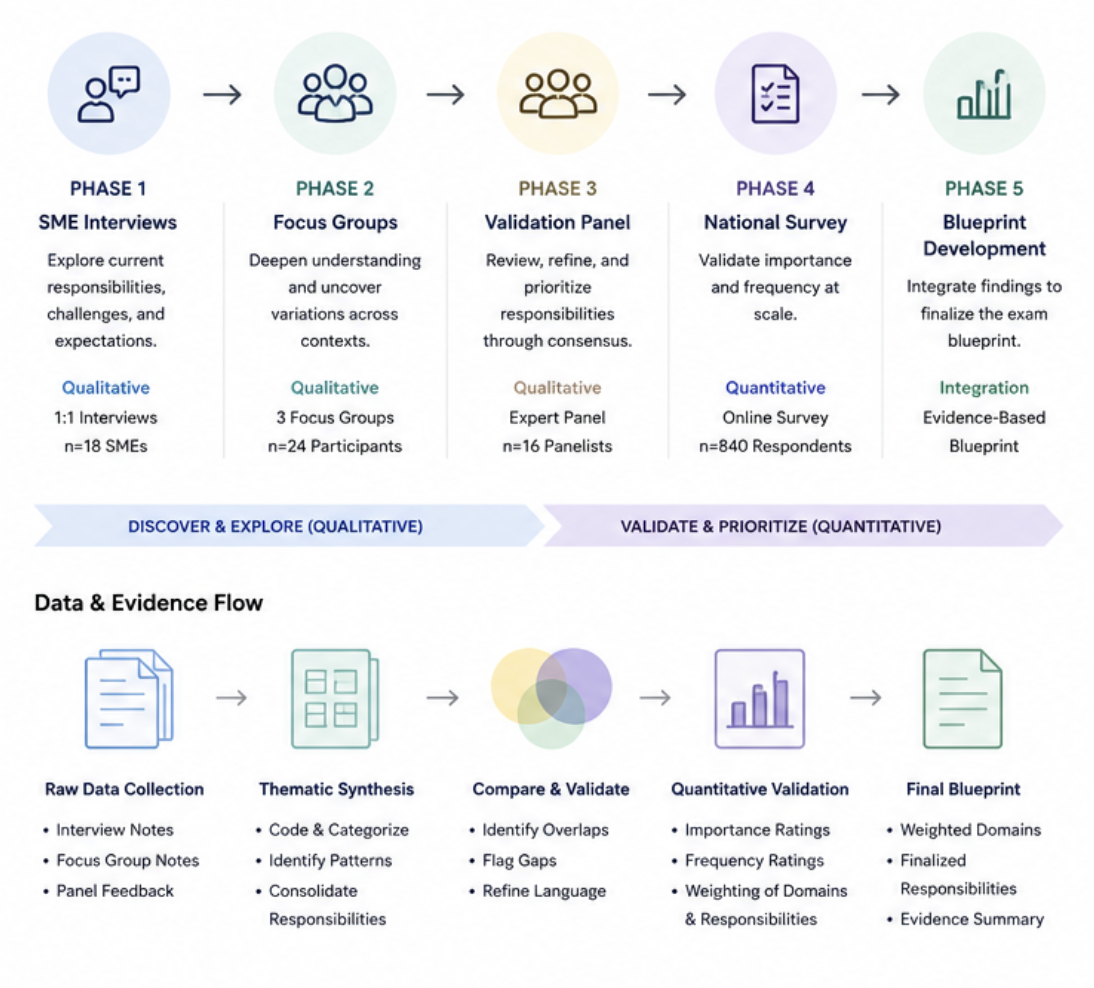
Designed a multi-phase validation approach combining qualitative and quantitative methods.
02
Subject Matter Expert Interviews
Conducted interviews with food safety professionals across foodservice, manufacturing, auditing, and quality assurance.
03
Workshop Design & Facilitation
Designed focus groups and expert panel activities to evaluate, refine, and prioritize responsibilities.
04
Survey Design & Execution
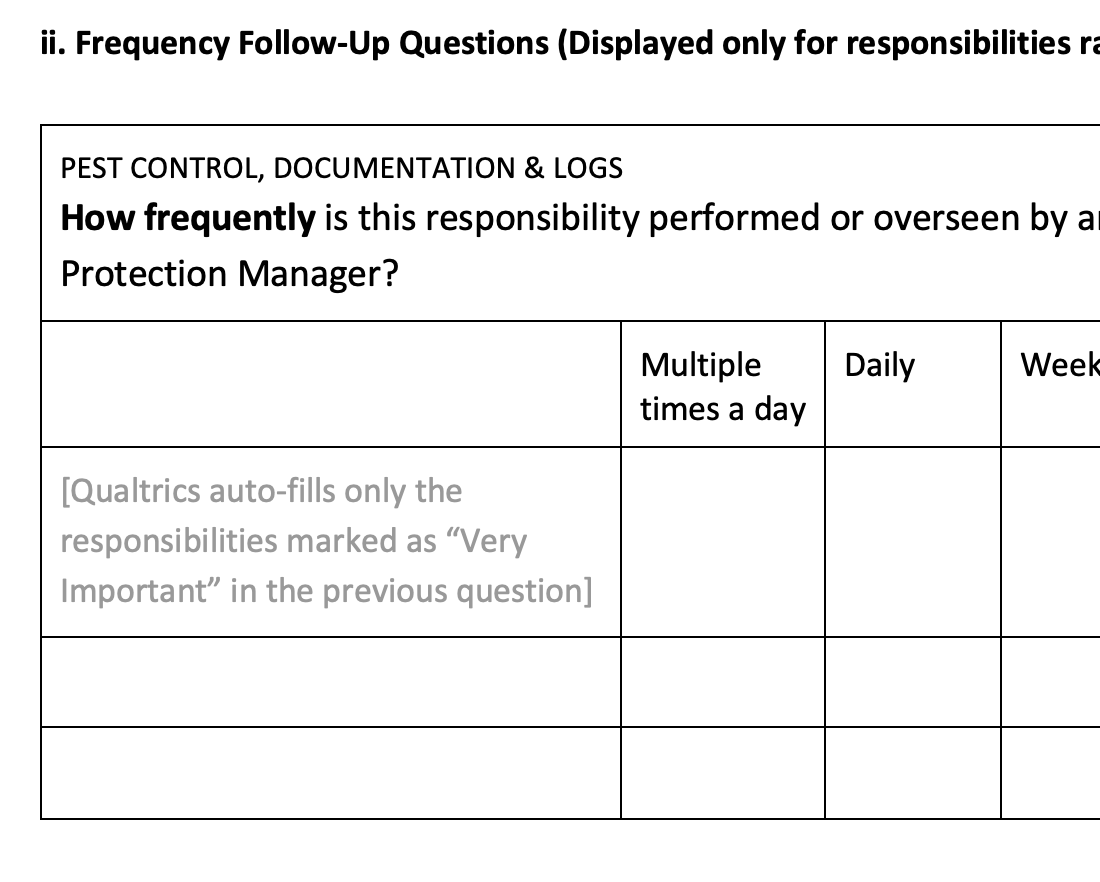
Developed an industry-wide validation survey measuring importance, frequency, and level of independence across responsibilities.
05
Synthesis & Framework Dev.
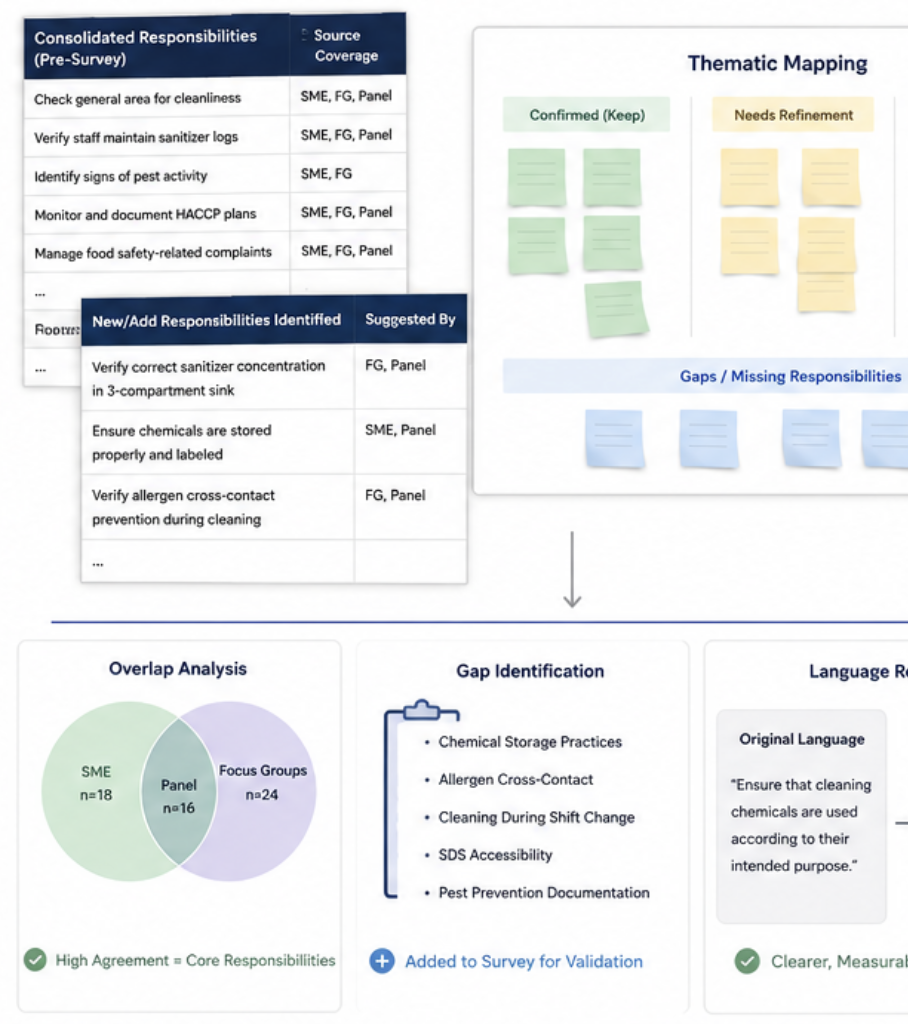
Consolidated responsibilities, identified gaps and overlaps, and refined competency language.

Phase 3: Industry Job Analysis Survey
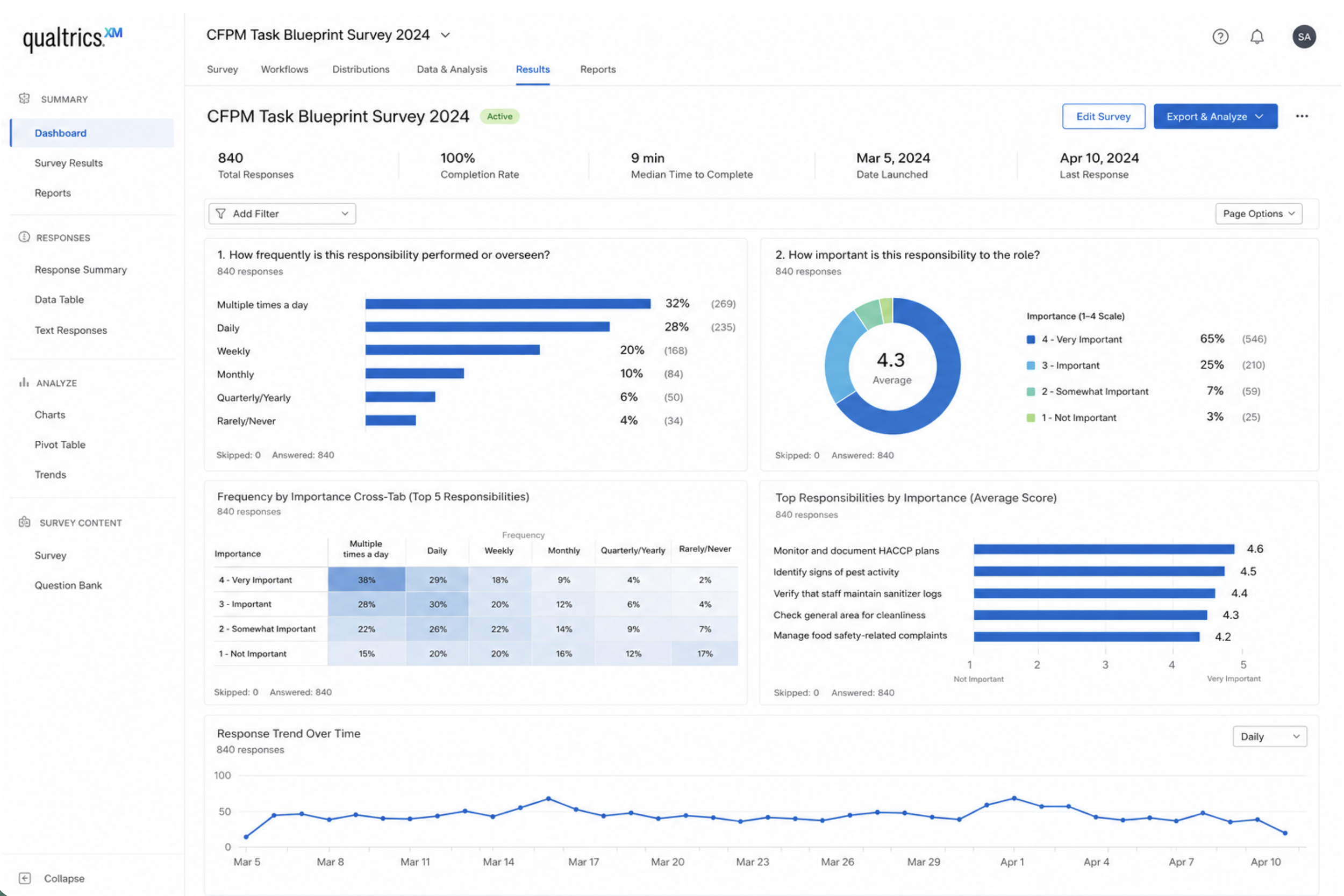
Finally, we launched a large-scale job analysis survey to quantify how responsibilities should be represented within the exam blueprint. A total of 840 food safety professionals participated. Respondents evaluated responsibilities across multiple dimensions, including importance to successful job performance, frequency of execution, and ability to perform independently. This allowed us to identify meaningful patterns and tradeoffs across responsibilities.
Outcomes
These distinctions provided a data-driven foundation for determining how responsibilities and domains should be weighted within the certification exam.

This project was a mixed-methods job analysis designed to identify the responsibilities, competencies, and assessment priorities of entry-level food protection managers. Unlike traditional customer research, this project focused on building an evidence-based certification framework through expert consensus and large-scale validation.

Phase 1: Expert Interviews
We began with subject matter experts representing multiple sectors of the industry. The objective was to generate an initial inventory of responsibilities, expectations, and emerging areas of practice.
Outcome
Generated 54 initial responsibility statements
Identified differences across operational environments
Established a baseline understanding of the role
Phase 2: Focus Groups
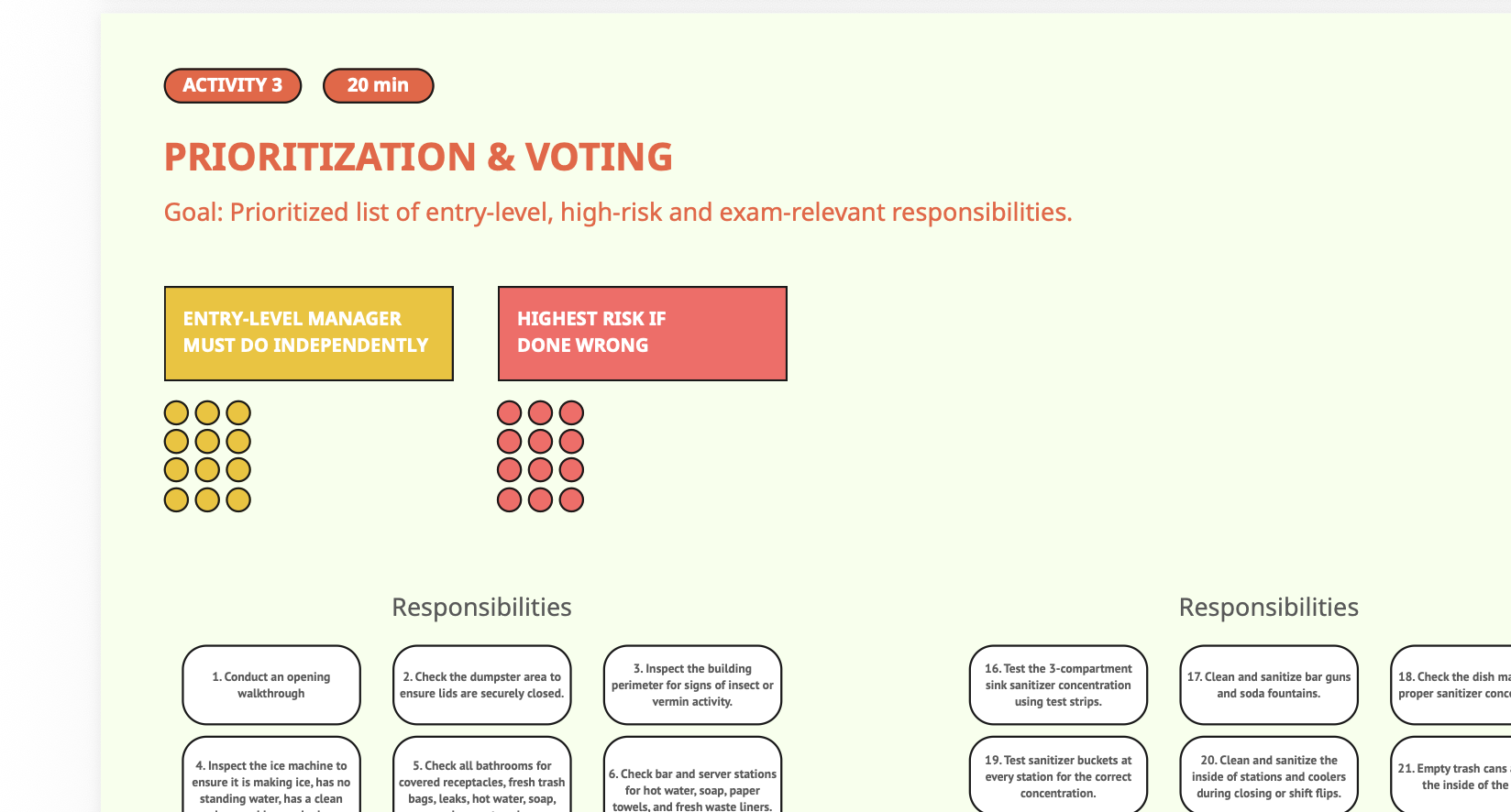
We then conducted 4 focus groups with practitioners to pressure-test the initial responsibility inventory. Participants reviewed responsibilities and identified missing responsibilities, unclear language, duplicative responsibilities, and tasks considered too advanced for entry-level professionals. The goal was not simply agreement, but informed debate and refinement.
Outcome
Refined and consolidated responsibility statements
Identified gaps in the original framework
Improved clarity and applicability of language
Research Approach.
Key Decisions
Enabled.
How should each domain be weighted within the exam?
The survey provided quantitative evidence to determine how much emphasis each responsibility area should receive rather than relying solely on expert judgment.
Which responsibilities are important despite occurring infrequently?
Some responsibilities appeared rarely in day-to-day operations but carried outsized risk when performed incorrectly. The research helped ensure these responsibilities were not underrepresented simply because they occurred less often.
Which responsibilities are common but less critical to assess?
Other responsibilities were highly frequent but less consequential from a food safety perspective. The research helped distinguish operational repetition from certification importance.
What should entry-level managers be expected to perform independently?
Findings helped separate responsibilities appropriate for independent practice from those requiring additional experience, supervision, or specialized expertise.