Reframing a $5.3B Growth Segment:
How GFS Can Win with Mexican Restaurant Operators
The Challenge.
Methodologies &
My Role.
01
Market Sizing
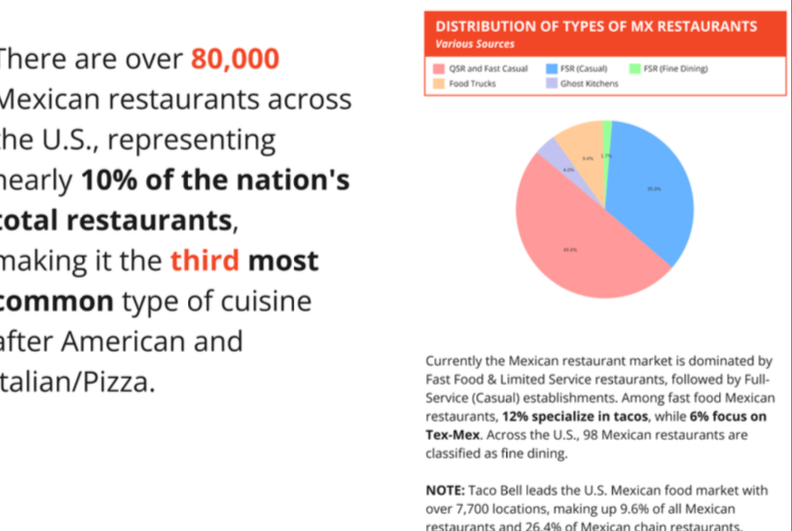
Identified a $5.3B market opportunity, priority geographies, and operator concentration.
Foodservice
〰️
Growth Strategy
〰️
Market Sizing
〰️
Foodservice 〰️ Growth Strategy 〰️ Market Sizing 〰️
Mexican cuisine represents one of the fastest-growing restaurant segments in the United States, yet Gordon Food Service lacked a clear understanding of who these operators are, how they source products, and what drives their business decisions.
Internal assumptions often framed Mexican restaurants as a relatively homogeneous category centered around tacos, food trucks, and price-sensitive operators. To determine where and how GFS should invest, we needed to understand the true diversity of the segment, quantify the opportunity, and identify where existing products and services aligned or failed to align with operator needs.
02
Competitive Analysis
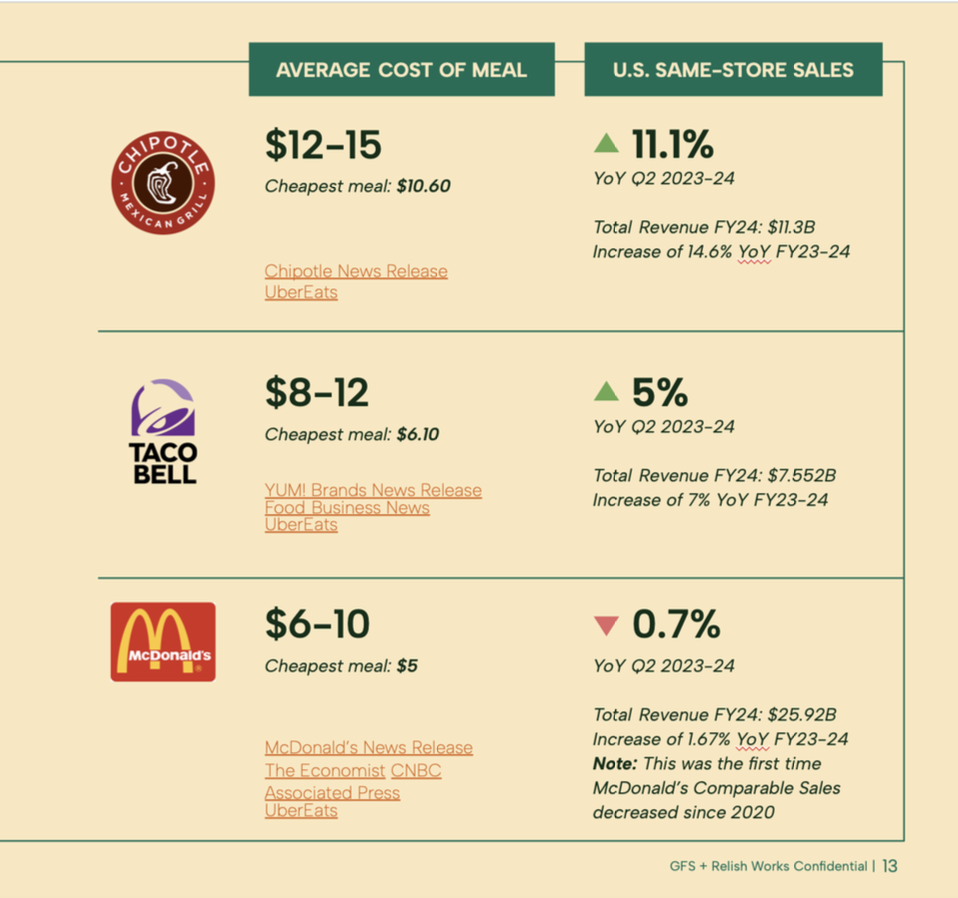
Benchmarked Chipotle, Taco Bell, McDonald's, demographic shifts, and industry trends.
03
Ethnographic Research
Conducted 10 in-depth interviews across 5 U.S. markets with QSR and FSR operators, and distributor field visits and intercepts.
04
Product Portfolio Analysis
Mapped Mexican ingredient needs against the GFS product catalog to identify assortment gaps.
05 Synthesis & Strategy
Synthesized qualitative and quantitative findings into strategic frameworks and product and service recommendations.

Key Insight #3: The opportunity isn't more products—it's the right products.
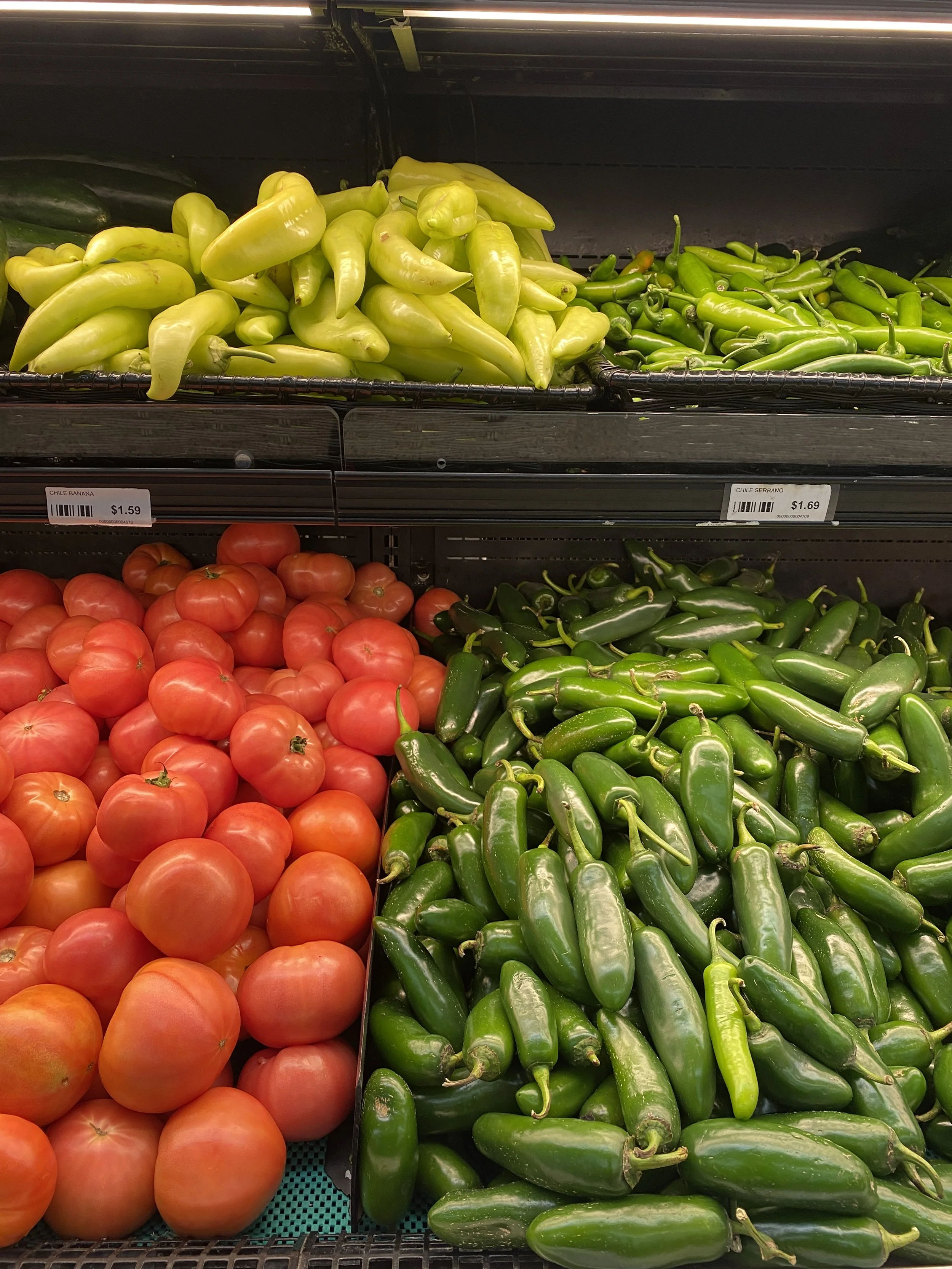
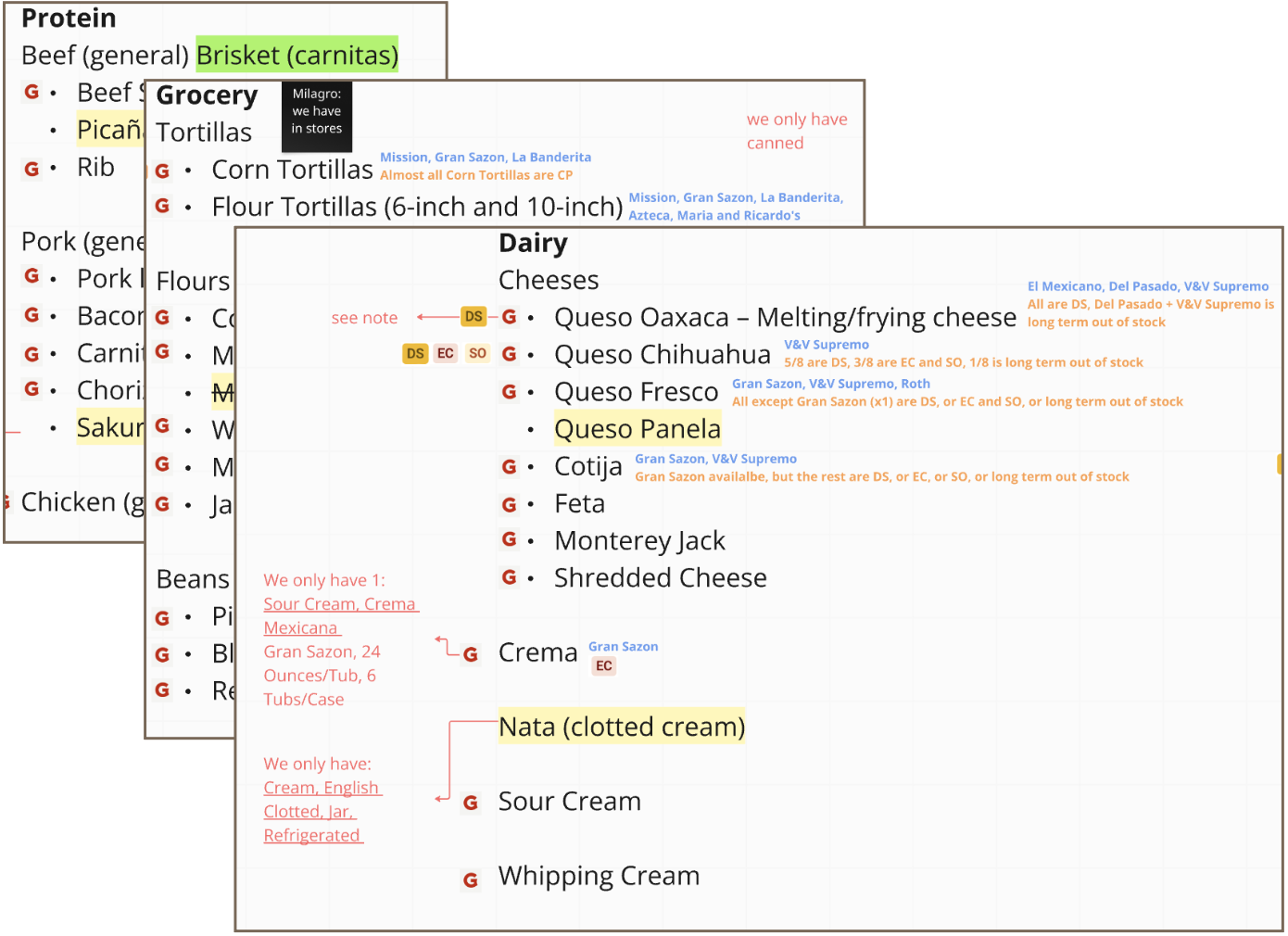
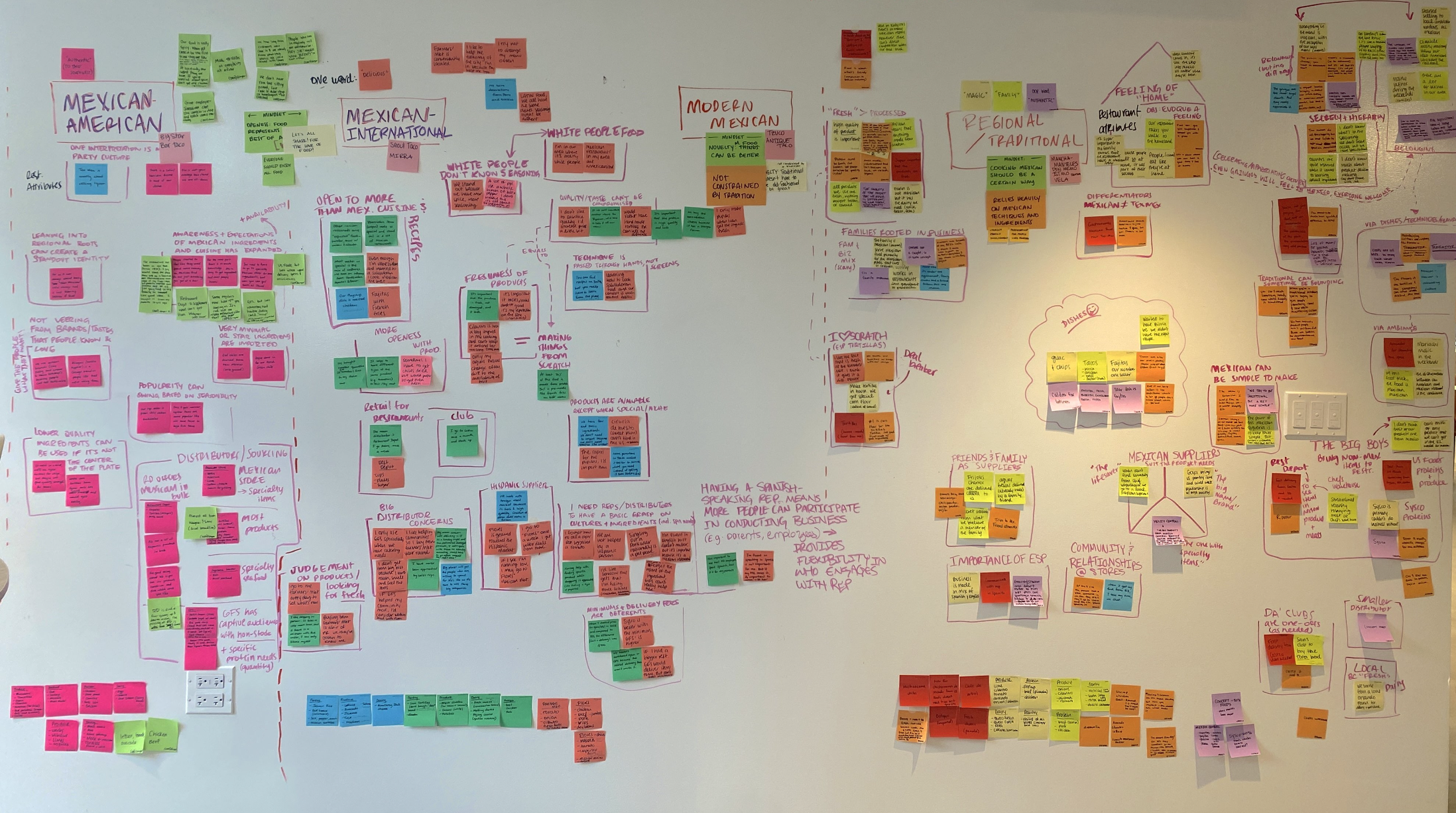
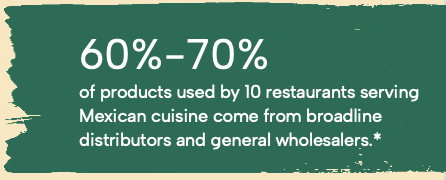
A detailed comparison of operator sourcing needs against the GFS catalog revealed that most Mexican operators already purchase 60–70% of their products from broadline distributors. Even many "specialty" ingredients were domestically available and commonly sourced through existing channels. The challenge was not assortment breadth. It was:
Carrying the right brands
Offering appropriate pack sizes
Meeting operator price expectations
The problem was less about product availability and more about product-market fit.
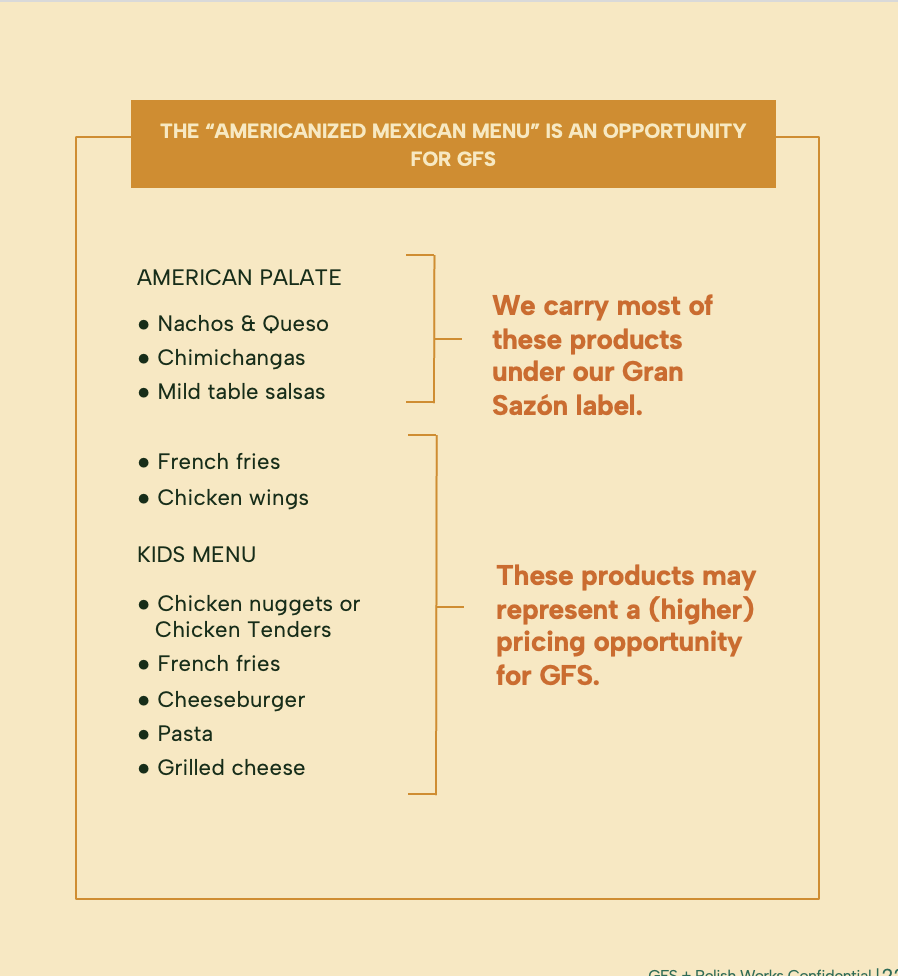
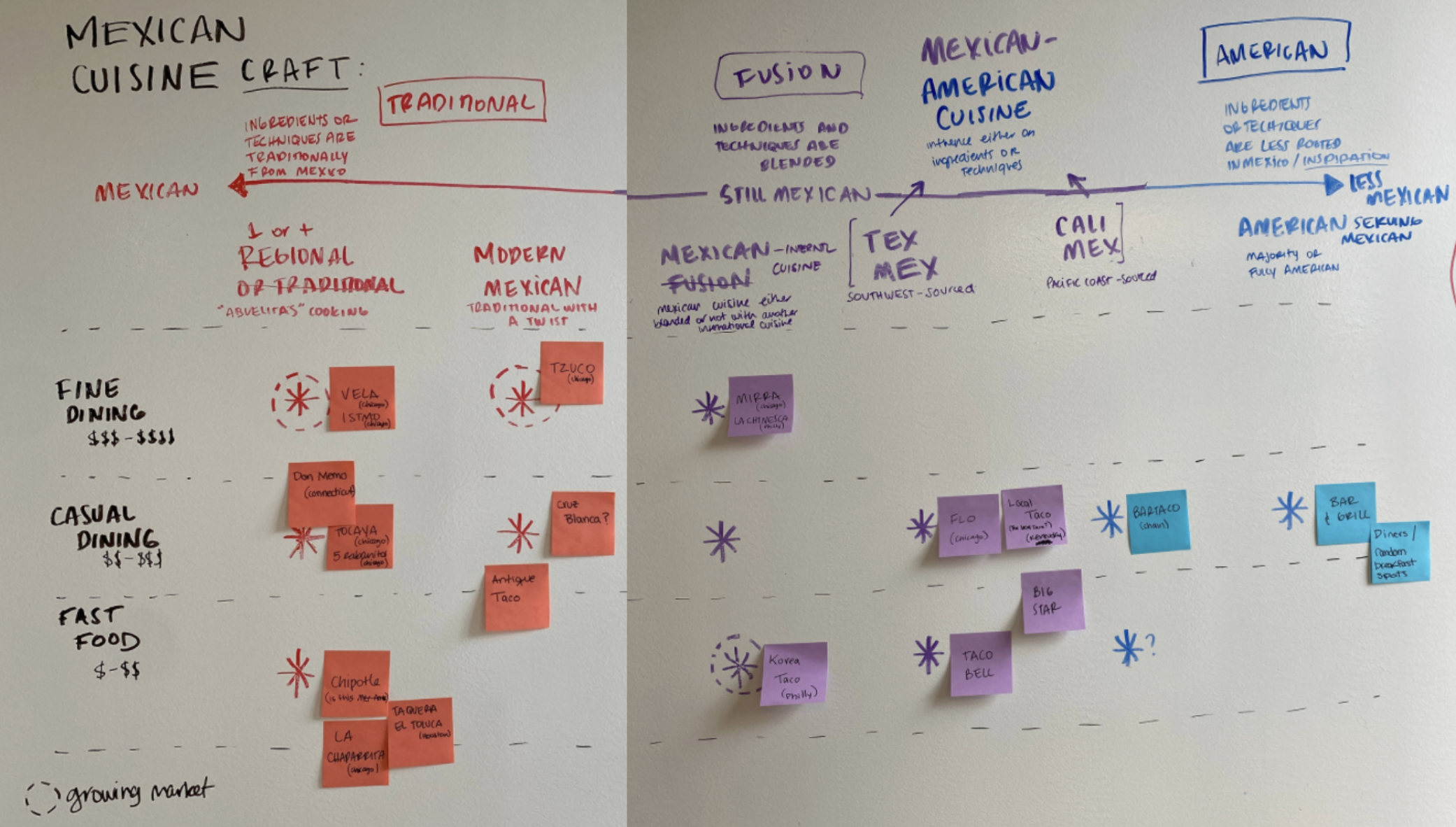
Key Insight #1: Mexican cuisine is not a segment—it's a spectrum.
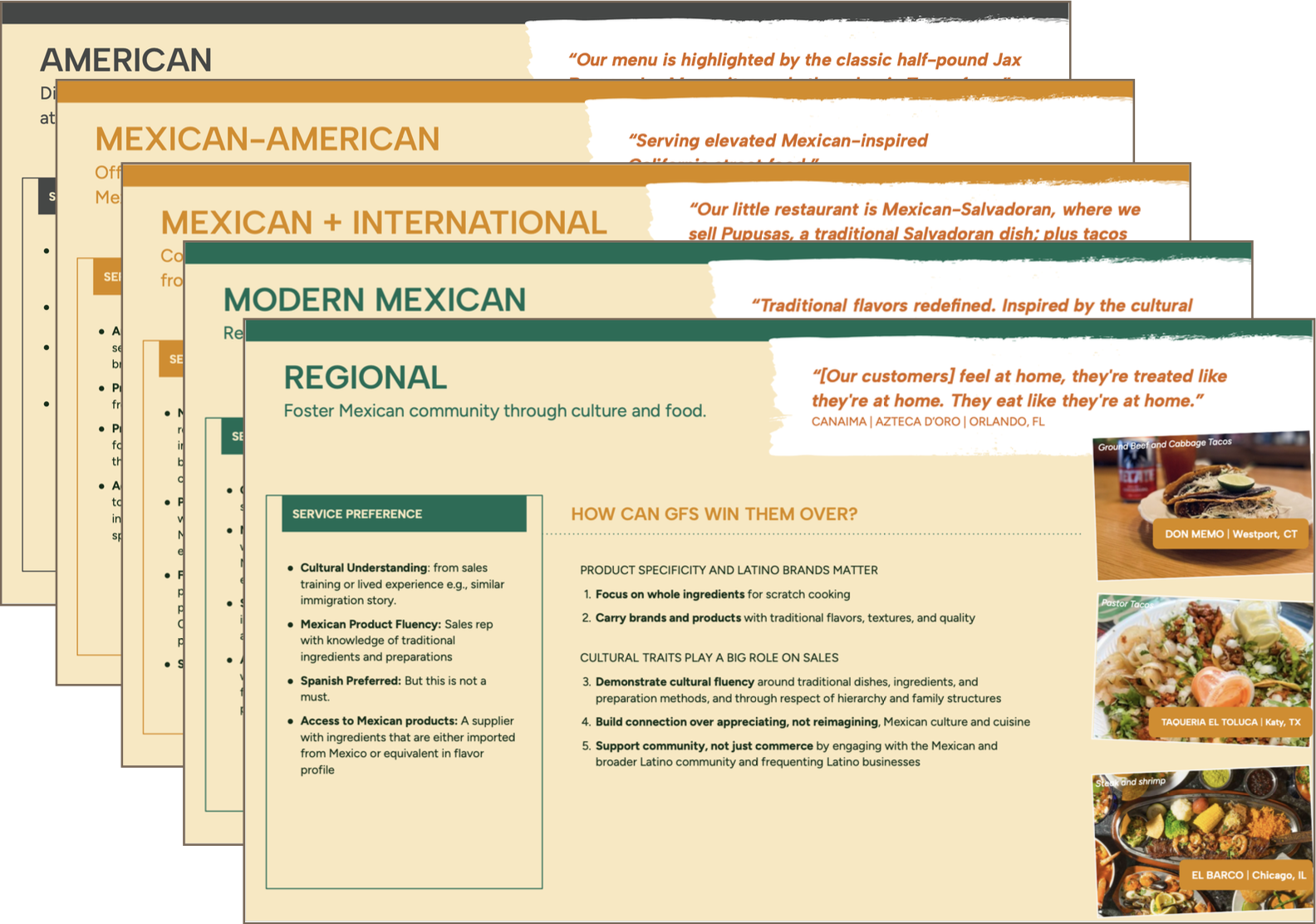
The category spans a wide range of concepts, from regional traditional restaurants to modern Mexican interpretations, fusion concepts, and Americanized formats. These operators differ not only in culinary approach, but also in:
Product preferences
Service expectations
Purchasing behaviors
Business priorities
Treating Mexican restaurants as a single customer segment obscures meaningful differences and leads to generic solutions that fail to resonate.

Key Insight #2: Cultural credibility matters more than language.
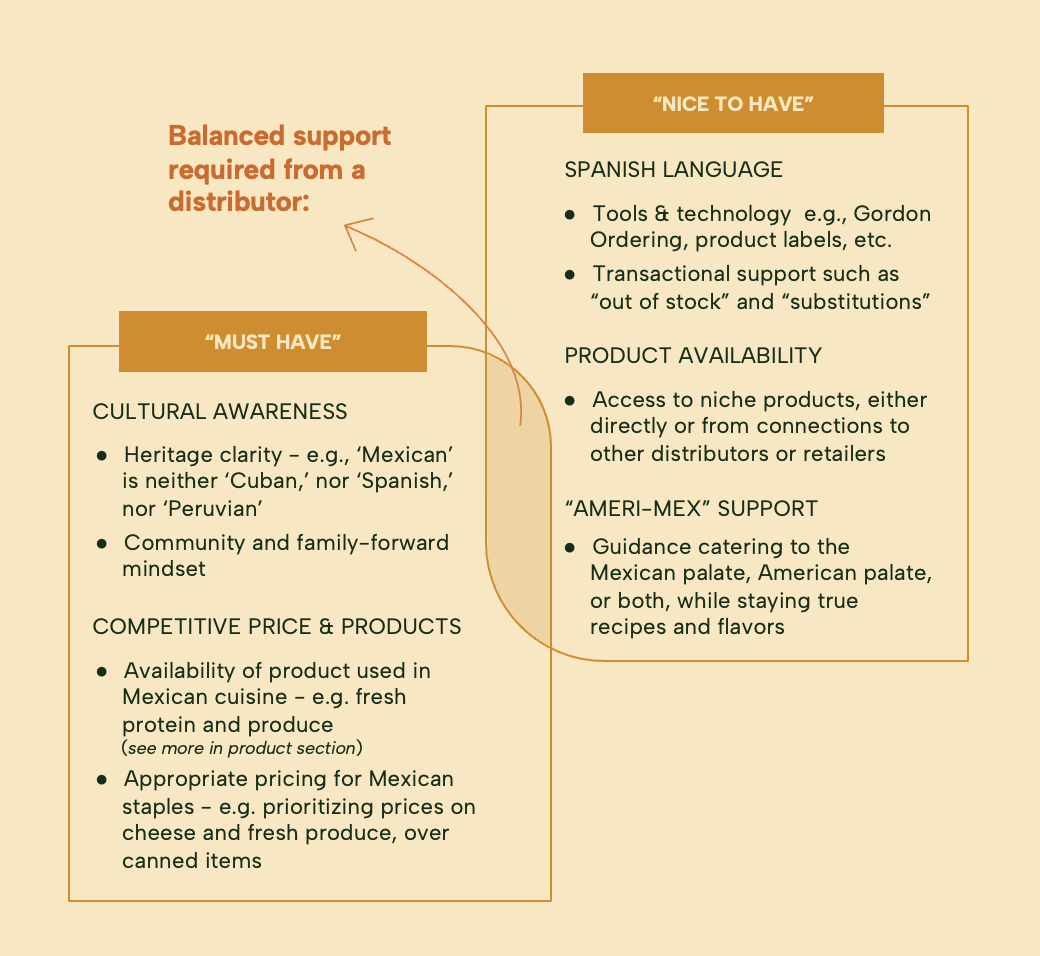
While Spanish-language capabilities were helpful, operators consistently evaluated distributors based on their understanding of ingredients, regional cuisines, sourcing realities, and operational challenges.
Trust was built through demonstrated knowledge rather than language alone.
This shifted the conversation from hiring more Spanish-speaking representatives to building deeper cultural and culinary fluency across sales teams.
Key Insight #4: Authenticity and business realities coexist.
Operators care deeply about tradition, heritage, and authenticity. They also care about labor costs, margins, customer preferences, and operational efficiency. Even highly traditional operators routinely adapt menus, substitute ingredients, and introduce Americanized offerings when necessary. Authenticity was not an absolute goal—it was continuously balanced against business realities.
This revealed opportunities for GFS to support operators beyond traditional Mexican ingredients alone.
Insights & Recommendations.
Impact.
Quantified a $5.3B market opportunity within the GFS footprint
Identified 14 priority U.S. markets, including several of the fastest-growing Mexican cuisine markets in the country
Revealed that 60–70% of Mexican cuisine ingredients are already sourced through broadline distributors, reframing assumptions around assortment expansion
Developed a behavioral segmentation framework to guide product, sales, and service strategies
Identified opportunities around brand assortment, pack sizes, and pricing rather than catalog expansion
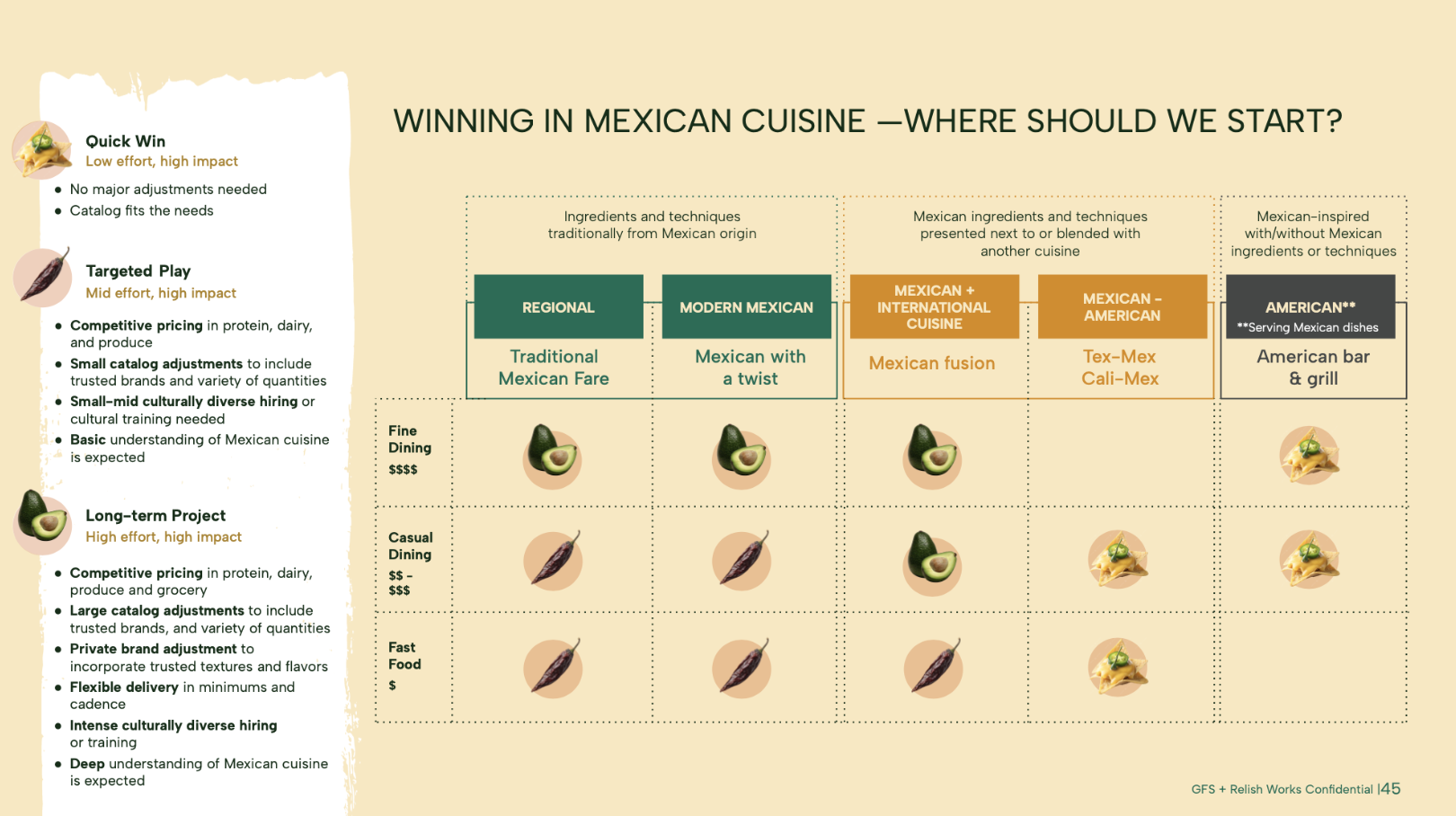
Effort x Impact
Strategy