The Challenge.
Methodologies &
My Role.
01
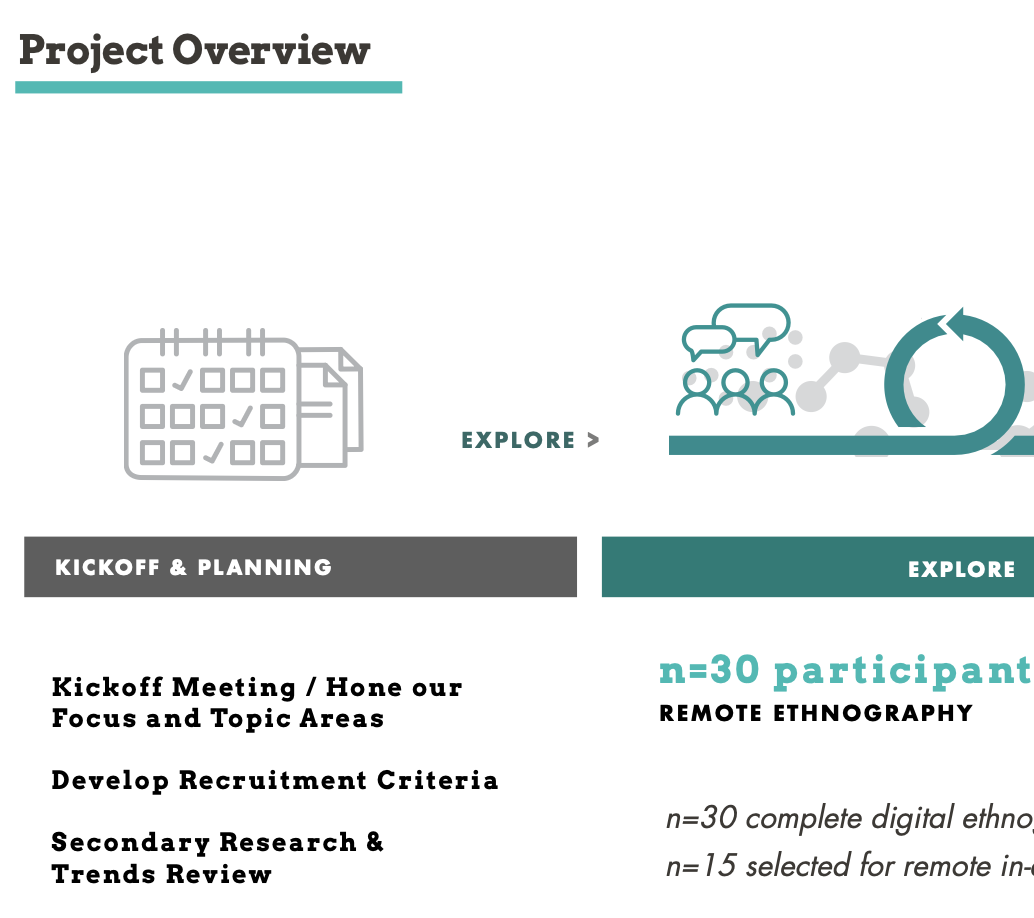
Research Design
Developed the research framework, discussion guides, digital ethnography activities, and recruitment criteria.
Financial Services
〰️
Consumer Trends
〰️
Service Innovation
〰️
Financial Services 〰️ Consumer Trends 〰️ Service Innovation 〰️
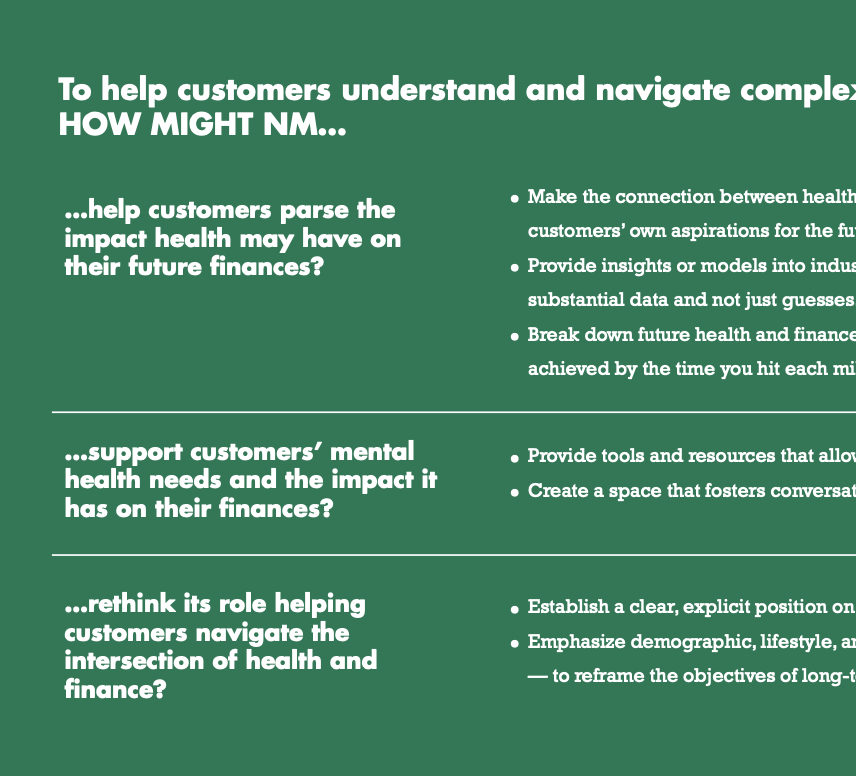
Northwestern Mutual recognized that changing consumer attitudes toward health, wellbeing, longevity, and financial security could create new opportunities beyond traditional insurance and wealth management offerings. However, little was understood about how consumers connected these domains or whether they connected them at all.
The goal was to uncover emerging behaviors, motivations, anxieties, and unmet needs at the intersection of health and finances, and inform future product and service innovation.
02
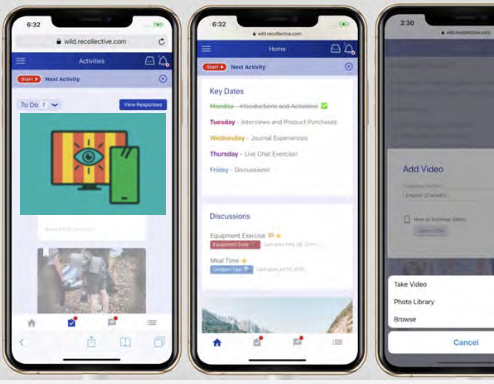
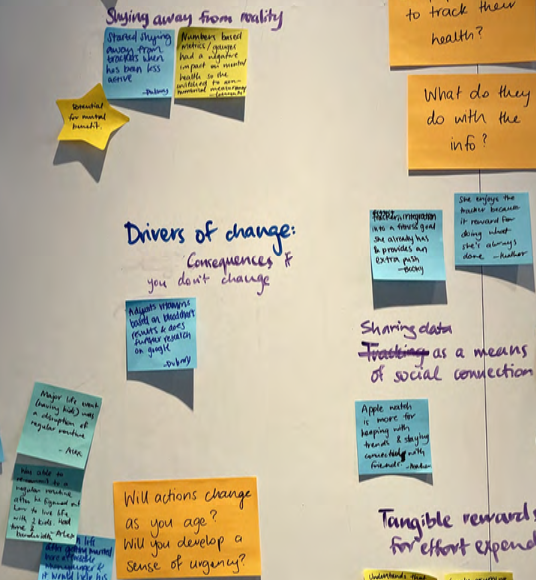
Remote Ethnography
Led a 34-participant digital ethnography capturing everyday health, financial, and planning behaviors across Gen Z, Millennials, and Gen X.
03
In-depth Interviews
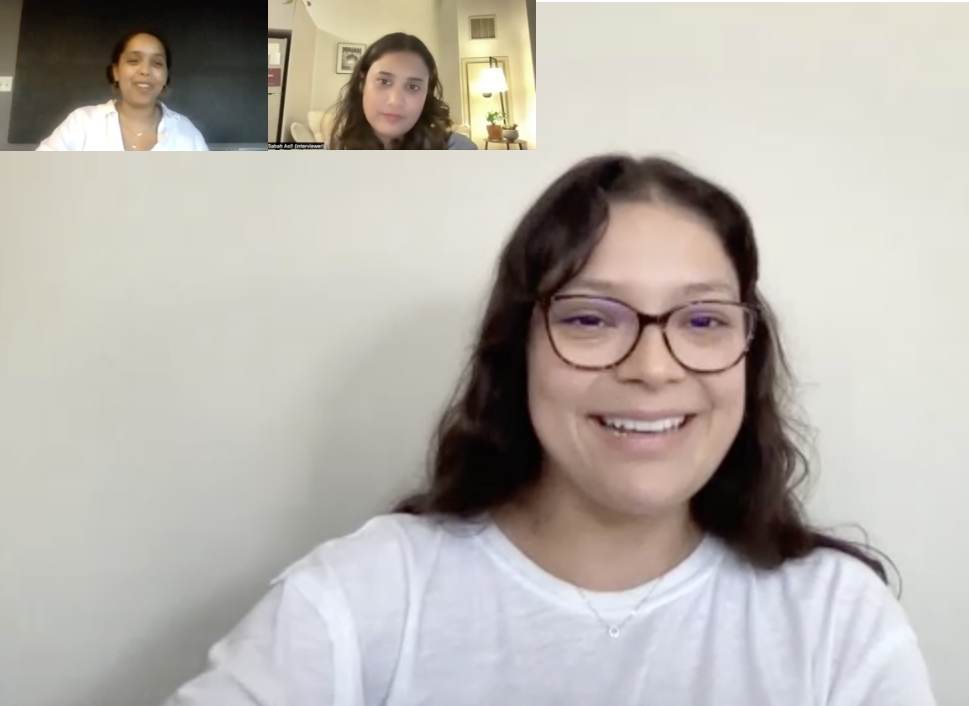
Conducted 16 interviews exploring motivations, trust, future planning, and relationships with financial and healthcare institutions.
04
Workshop Facilitation
Facilitated client working sessions to align on opportunity areas, refine business questions, and shape future innovation priorities.
05 Synthesis & Strategy
Synthesized behavioral patterns into strategic themes, opportunity spaces, and future-state scenarios for executive stakeholders.

Identifying Future Opportunities at the
Intersection of Health & Wealth
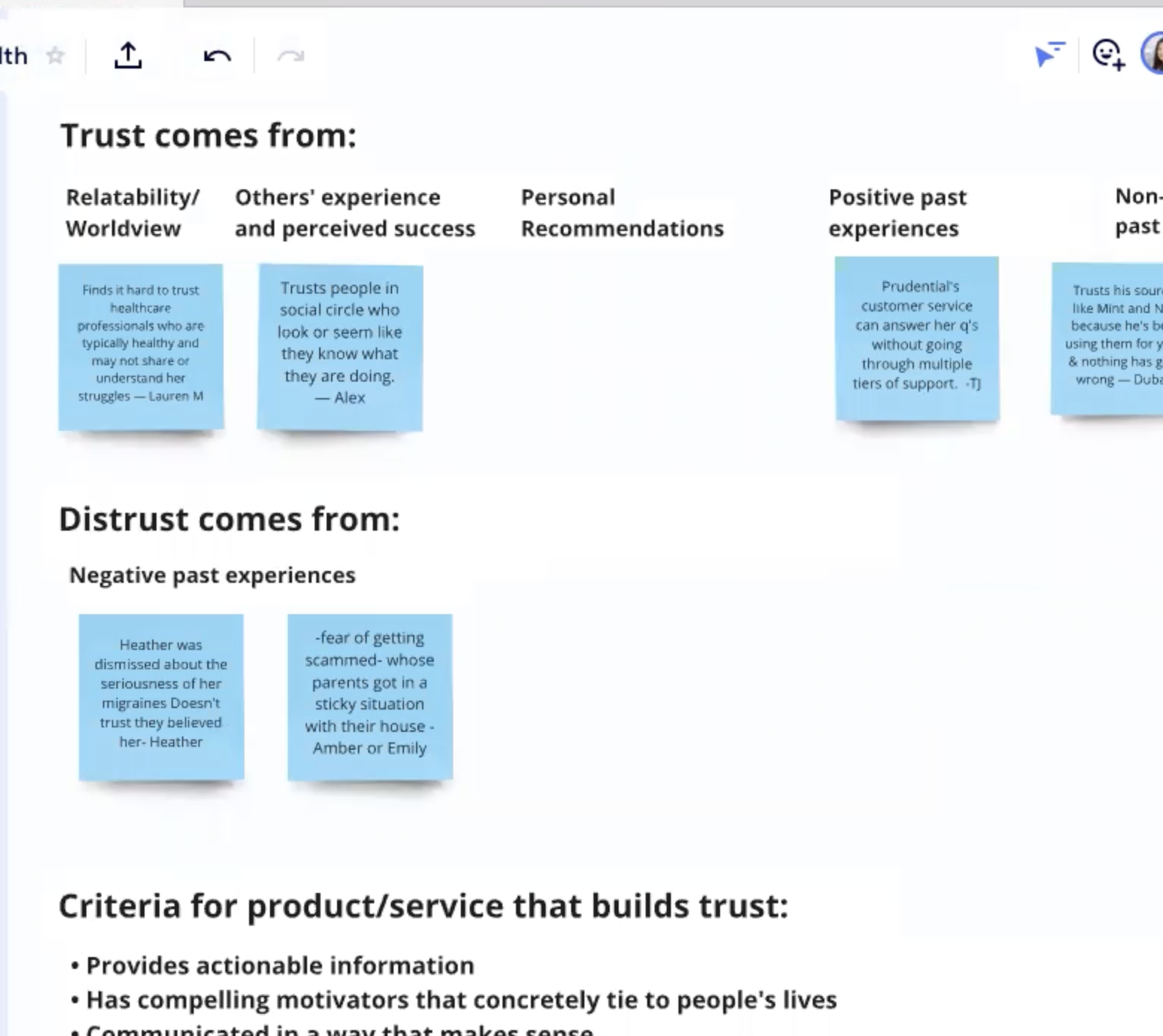
Key Insight #3: Trust, not data, is a prerequisite for influence.
Participants viewed health and financial guidance differently, often assuming healthcare providers acted in their best interests while questioning the motivations of financial institutions. Consumers were willing to share health data when the value exchange was clear, but were skeptical of financial institutions using that information without transparent benefits.
Building trust requires demonstrating clear customer value, transparency, and a genuine commitment to improving wellbeing—not simply collecting more data.
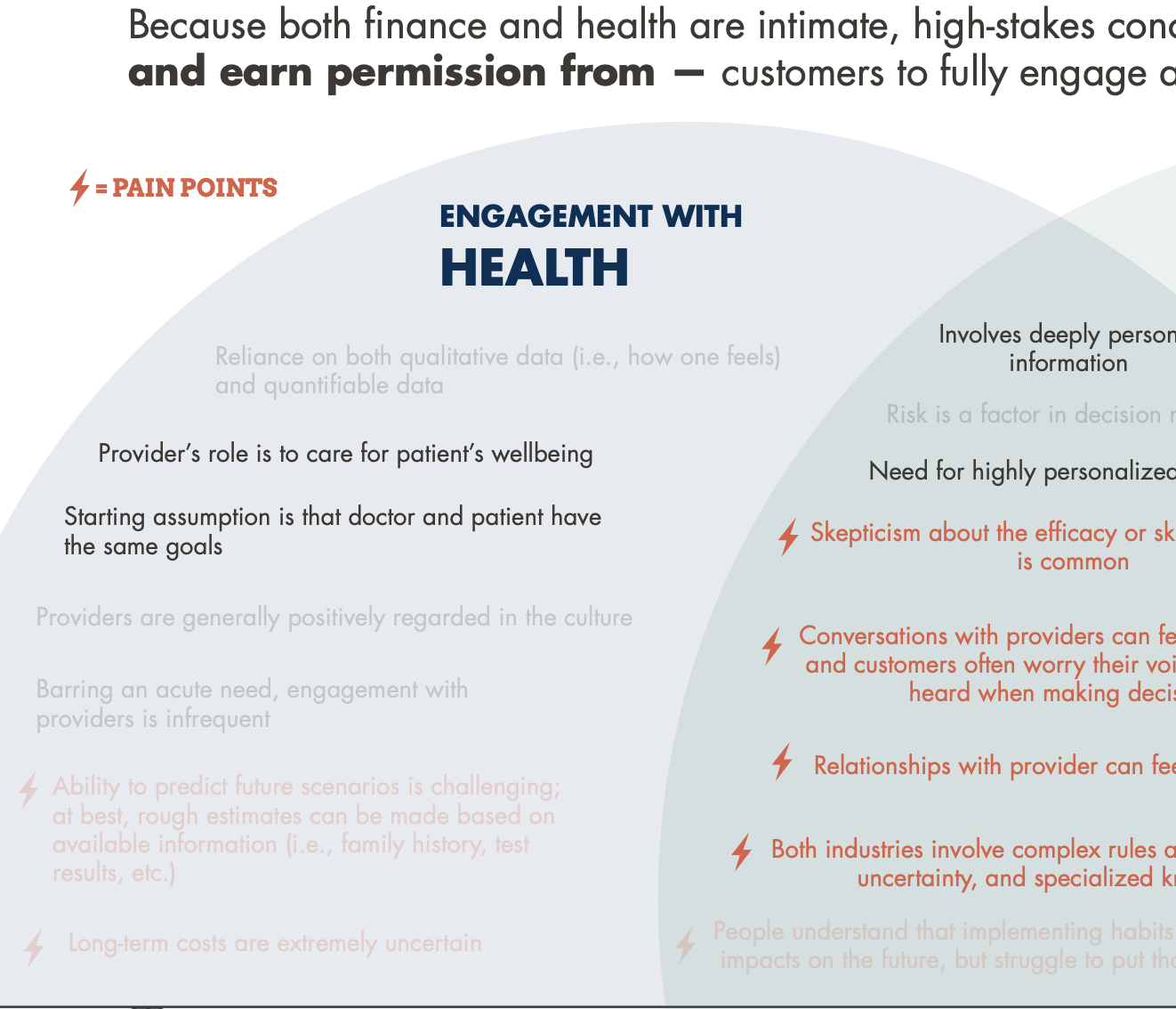
Key Insight #2: Health and finance share surprisingly similar
behavioral challenges.
Both require navigating uncertainty, interpreting specialized information, trusting experts, and making sacrifices today for uncertain future benefits. Financial institutions have an opportunity to become long-term wellbeing partners. Participants responded more positively to organizations that helped them live healthier, longer lives than to companies focused primarily on insurance products.
This opens the door for financial institutions to expand beyond traditional insurance offerings into proactive health and financial wellbeing services.
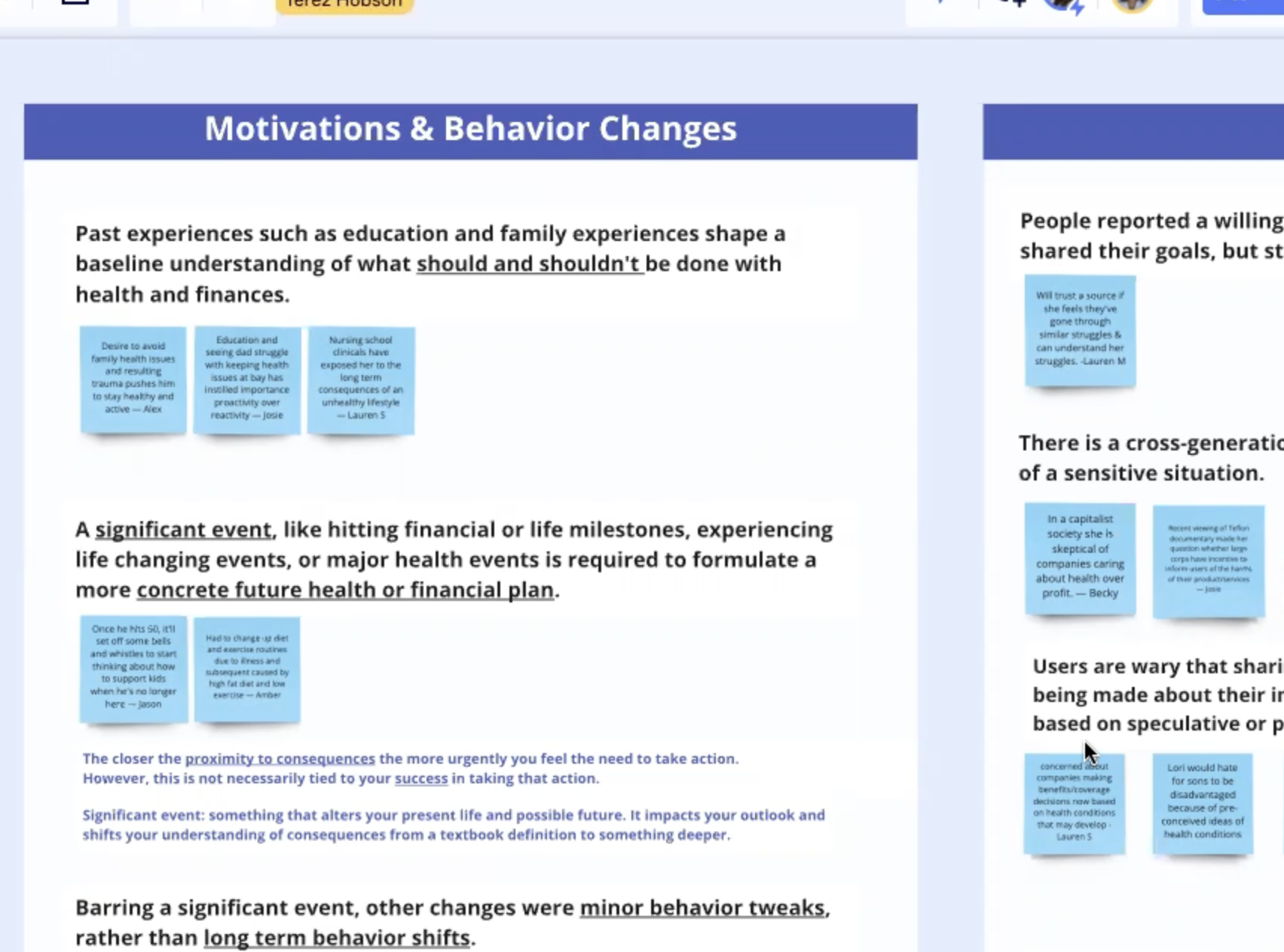
Key Insight #4: Motivation depends on visible progress.
Motivation is also driven by life events, not more information. People rarely change behavior because they learn something new. Consumers were more likely to sustain behaviors when tools provided immediate feedback, reassurance, and achievable milestones rather than distant future outcomes.
Products and services should align with moments of heightened motivation rather than relying solely on ongoing education or awareness campaigns.
Key Insight #1: People understand the connection between health and finances, but rarely act on it.
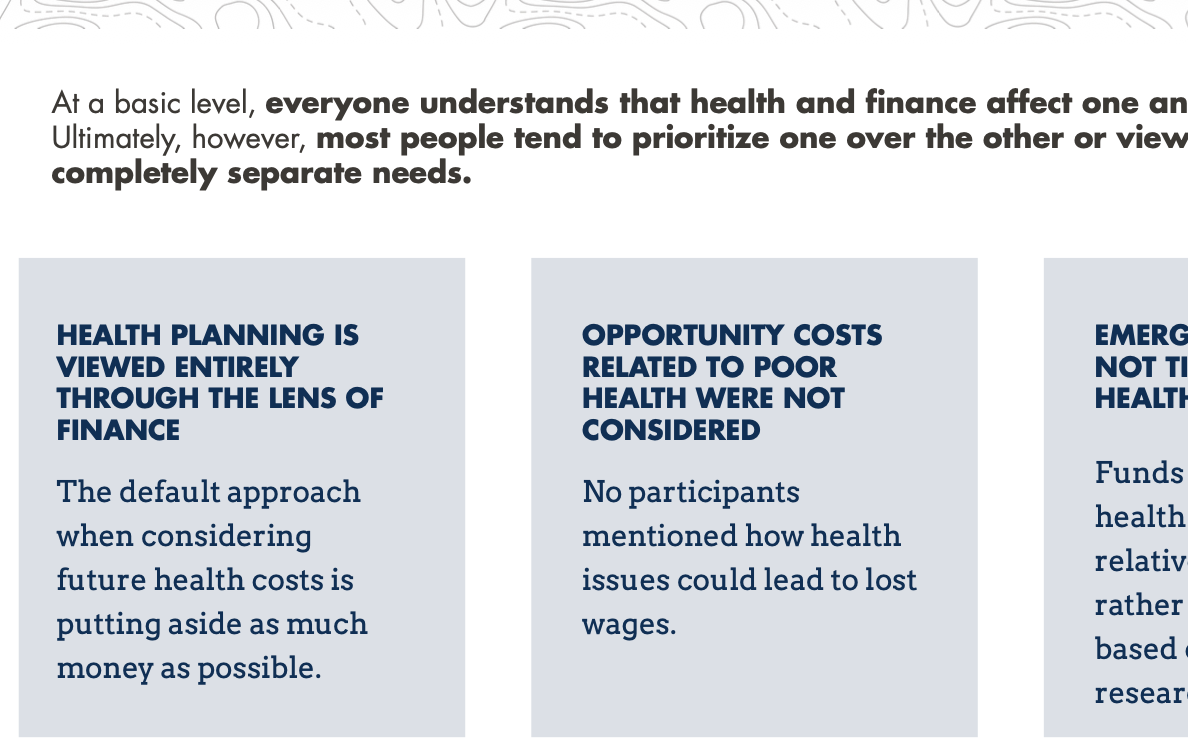
Health and financial decisions are deeply connected, but rarely planned together. Consumers could easily articulate how poor health might lead to medical expenses, yet health and financial decisions remained largely disconnected in day-to-day life.
This creates an opportunity to help consumers make the connection tangible through proactive planning tools, education, and personalized guidance.
Behavioral
Insights.
Outcomes.
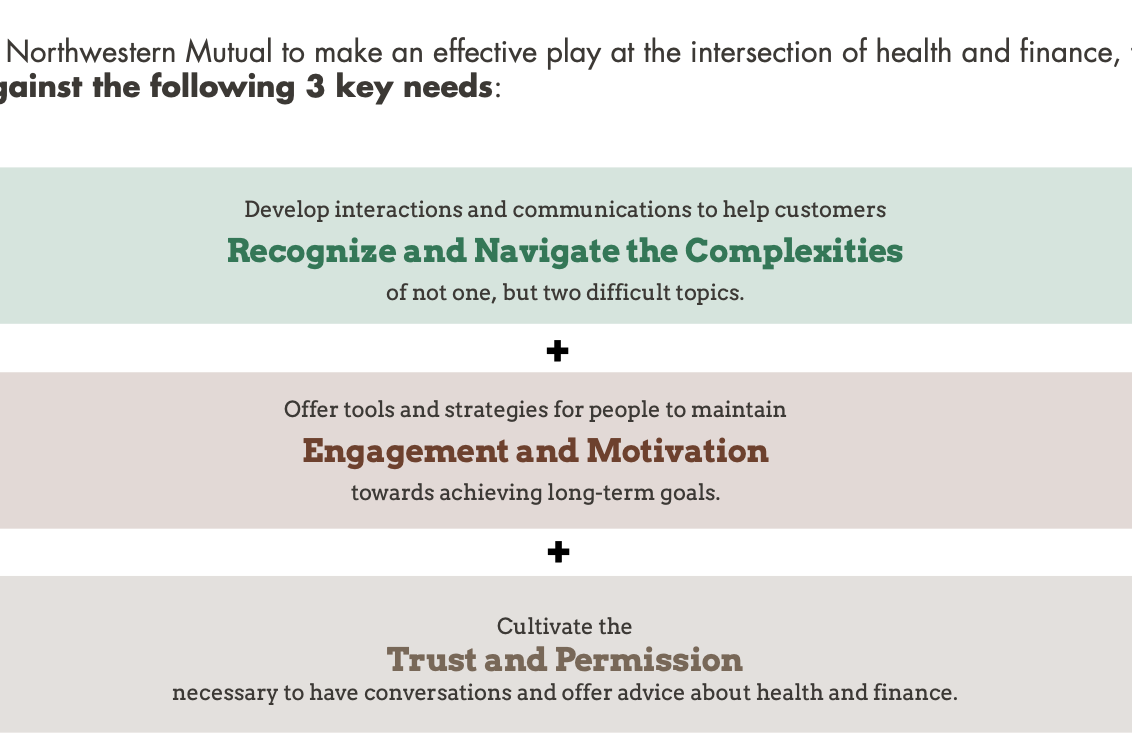
Identified 3 strategic pillars for future innovation including helping consumers navigate complexity, maintain motivation toward long-term goals, and establish trust around deeply personal topics.
Uncovered a major opportunity gap: while consumers intellectually understood that health and finances affect one another, very few actively made decisions by considering both together.
Reframed Northwestern Mutual's role from insurance provider to lifelong wellbeing partner.
Created future-state scenarios and strategic provocations to guide long-term product and service innovation.
Equipped leadership with an evidence-based framework for evaluating future investments at the intersection of health and wealth.